
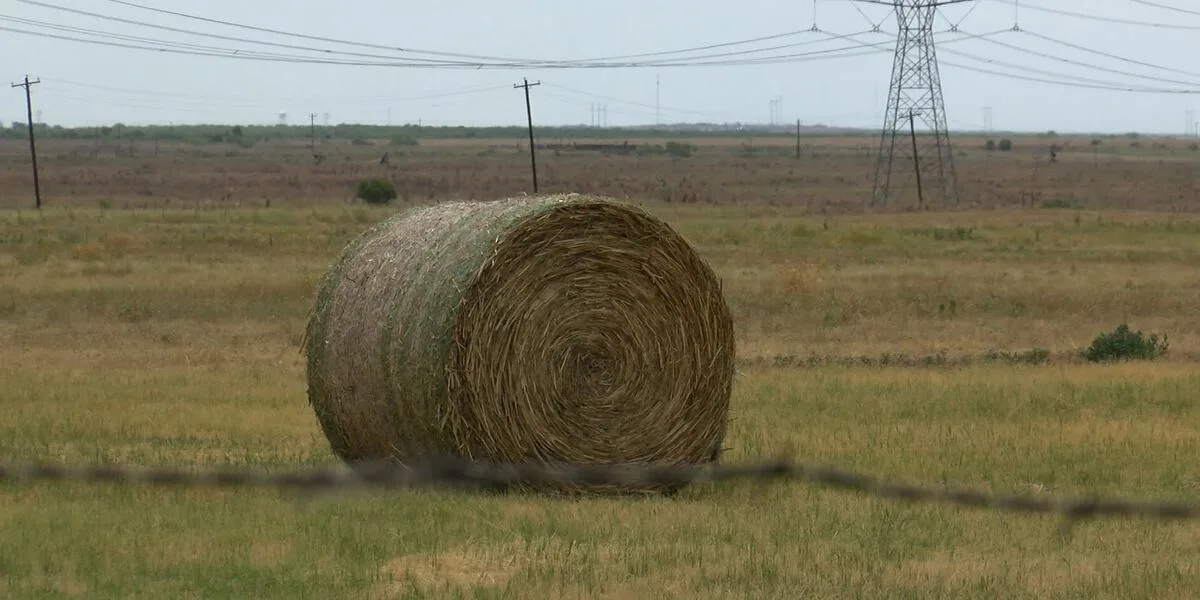
Even as we're facing the screw worm out in far west Texas with great concern of it getting to our area, there's another insect already causing significant economic losses in parts of south and central Texas.
While it isn't receiving nearly the same attention, it has already damaged thousands of acres of pasture and hay production."This new pest is the pasture mealybug. This is a tiny white insect, similar to the mealybugs that you may have found in your home landscape or garden. It's covered with a waxy covering, giving it kind of a cottony appearance. They're small, only two to five millimeters long. Both immature and adult pasture mealybugs feed by sucking sap from grasses. They're often hidden down under the thatch, around the crowns, beneath the litter, and even under cow patties. What makes this such a problem is that it can be very difficult to detect until large-scale damage appears. As you're out in your St. Augustine lawn or Bahia pasture, don't think that you're going to see these insects crawling everywhere. They're small and hidden. By the time obvious damage develops, the population might be quite large. In Texas, some of the worst damage has been observed in bahiagrass, but bermudagrass, St. Augustine and several other grasses can also be affected. At first, it'll just be a yellowing or a reddening of the leaves. You'll think it resembles a pasture or lawn that is affected by drought, even when adequate rainfall has occurred. Dead patches will expand, and we've seen them expand until they encompass entire pastures and hay meadows. Researchers at Texas A&M University and other universities around the world who have been studying this insect say that it can be spread by livestock, farm equipment, on clothes, or on our lawnmowers. It is also true that it can be spread by the wind, although that's of very little consequence given the big jumps it's making across our state. The stinker is that there are no insecticides specifically labeled for pasture mealybug, and research has shown many commonly used products have provided poor control. In some studies, broad-spectrum insecticides may even reduce beneficial insects that naturally help suppress mealybug populations. What we have found is that avoiding over-fertilization tends to discourage them from becoming an active feeder on that vegetation. And if you do think you've got them in your pasture or hay meadow, we would encourage you to go ahead and graze it heavily. Researchers have found that closely grazing or harvesting heavily infested forage for hay may reduce habitat for the insects. While this won't eliminate the problem, it may help slow population buildup. Producers that are baling hay might look back behind them when they're cutting the grass and see a white cloud that's not really dust and it's not really smoke, but something else in the air. That cloud is a huge sign of the pasture mealybug being shredded by the cutting blades. If you think you have them, please call your county extension agent, and we will refer you to the entomologists that are studying this across the state. We currently haven't seen it here, but it's only one or two counties away, and the fear is that it's here and nobody's just caught on to it yet. The New World screwworm deserves the attention it's receiving because of the threat it poses to livestock. But producers shouldn't overlook the pasture mealybug. Unlike screwworm, this insect is already damaging Texas pastures and hay meadows today, making early detection and reporting our best tools until more effective management options are available. EAST TEXAS (KLTV) - Even as we're facing the screw worm out in far west Texas with great concern of it getting to our area, there's another insect already causing significant economic losses in parts of south and central Texas. While it isn't receiving nearly the same attention, it has already damaged thousands of acres of pasture and hay production."This new pest is the pasture mealybug.
This is a tiny white insect, similar to the mealybugs that you may have found in your home landscape or garden.
Comments