
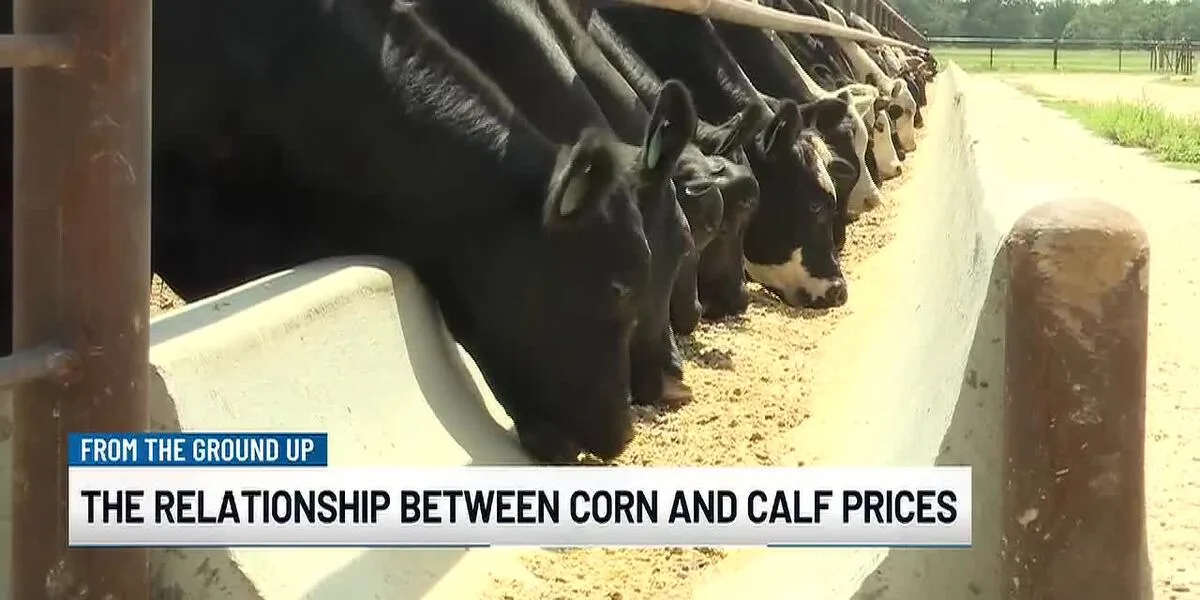
BRYAN, Texas (KBTX) - This summer, there was a spike in corn prices that drove down calf prices for a short time until corn prices came down again."So calves, when folks sell them from the ranch, they're either going to some kind of, at this time of the year, some kind of wheat pasture, oat pasture, winter grazing, or they're going to a backgrounder and then going to a feedlot," David Anderson, professor and Texas A&M AgriLife Extension economist, said.
"So if I want to feed those animals to their full-grown weight, I've got to buy feed and I've got to buy the animal. And the more I paid for feed, the less I can pay for the animal and make this work financially."Anderson said that's why we have this relationship between feed costs, corn prices and calf prices: When corn goes up, calf prices go down and vice versa."So we still have this relationship between feed and the calf price, but because of these historically small numbers, prices are higher. Fundamentally, we've got fewer calves for sale and higher prices because we have these segments. We got calf producers, feedlots, hackers, retailers. Every one of them is they're separate from each other. They're not completely integrated," Anderson said.
He explained that different segments of the beef industry don't all profit at the same time."And so what we have when we have really low cattle numbers and really high prices, the people beyond the ranch tend to lose money. That's what we're seeing happening now, particularly on the feedlot side," Anderson said.
Comments