
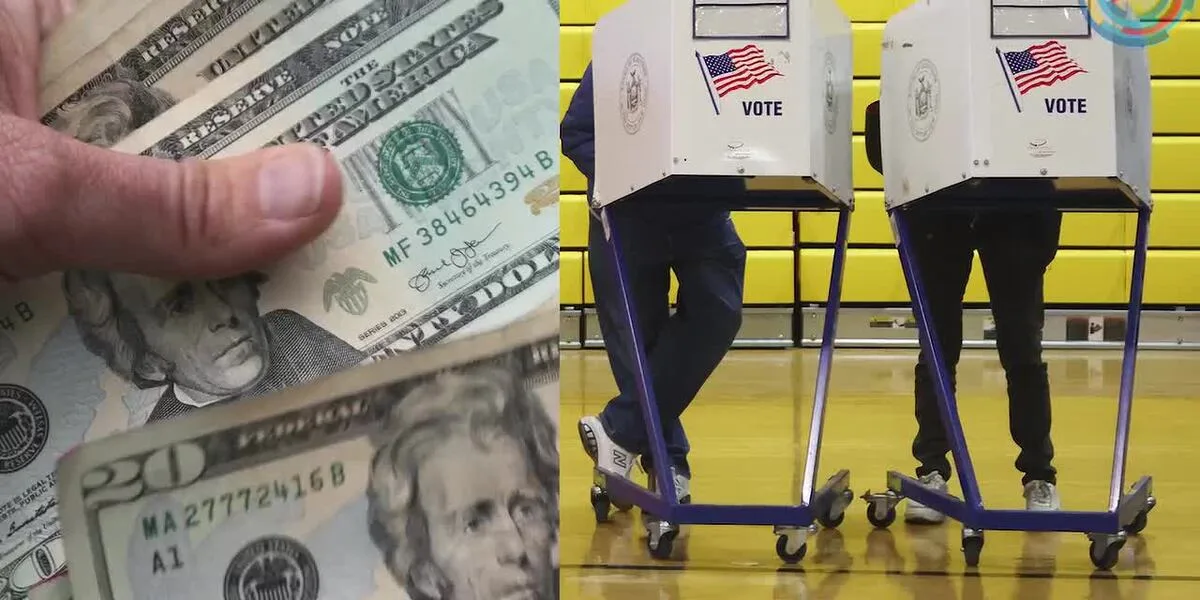
As voters prepare to head to the polls for the midterm elections, a conflicting economic sentiment is once again emerging on the campaign trail."Voters reflect the perception of the cost of living as they experienced, as opposed to what is in the data," said Alessandro Rebucci, an economics professor at Johns Hopkins Carey Business School.
"In the data, you have an economy that is very strong as a whole. How that pie is distributed affects how a large segment of the population and the voters are feeling about the economy right now."The contradiction has been described by many economists recently, as the "k-shaped" economy, using a graph to depict how high-income earners and asset owners are doing compared to middle and lower-income earners.
Economists have been describing the "k-shaped" ahead of the midterm elections, to explain the disconnect between positive economic indicators and voters' lived experiences.(Gray Media Inc. Washington News Bureau)"To be concrete, the wealthiest households are presumed to spend much more than the lowest ones, not only in absolute terms, which is obvious, but also as a share of their income and in their wealth," Rebucci said.
Comments